


Alt-E: Crossing The Valley of Death
12/02/08 12:43
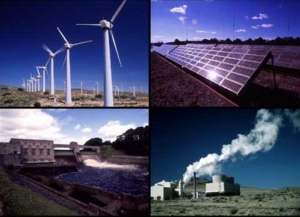
We admit Alternative Energy isn’t our usual topic - however it is a crucial component of the energy equation. Alt-E companies from startups to General Electric wind turbines have three new challenges which is not good news unless you’re a fossil fuel company.
1. Project Finance has largely dried up. The construction & operating loans that builds wind farms, solar arrays or biofuel refineries that sell electricity (or biofuel) to electric utilities or fuel distributors are gone to the twin victims of credit-crunch, lower energy purchase prices and lower energy demand...
2. The Valley of Death: Lack of expansion capital - the “late stage” venture capital that most Alt-E technologies need to build full-scale proof-of-concept installations has also dried up. As a VC, I’m thinking why should I invest in scale-up if there is no project-finance available when the concept is proven?
Today’s VC focus is towards capital-efficient companies that are close to break-even, are recession resistant, and don’t face future financing risk. Unfortunately, most early stage Alt-E companies are none-of the above.
3. Energy Price Risk: Alt-E companies now face energy prices about half of what they were a year ago. While we know that current prices are as unsustainably low as $150 per barrel oil was unsustainably high, projects that were based on scenarios of $80 per barrel oil are no longer as attractive as they were a few months ago. As a result, the price of silicon has fallen dramatically and some PV fabs are already closing.
Overall we believe that (like many sectors) the Alt-E world will slow down significantly over the next couple of years but will be smarter, leaner and better able to compete when the economy (and energy prices) rebound.
There is some silver lining - energy-efficiency companies can often still meet VC expectations and most remain profitable with energy prices where they are ($50 - $60 / bbl. oil) vs. the $80-100+ required for many Alt-E companies.
 for example is a smart-power control system company that optimizes power management for homes, vehicles and power grids. Battery power, LED lighting, and electric vehicle companies also continue to receive large amounts of venture capital. It’s an odd grab-bag of the funded. Some companies such as EV cars require hundreds of millions to scale up and produce - as we mentioned just yesterday Tesla, and not Aptera and other EV companies have lined up for their share of the federal handout program.
Stay tuned... it could all be different tomorrow if our slow deflation turns rapid inflation if China decides to buy Euros instead of dollars...
Today’s VC focus is towards capital-efficient companies that are close to break-even, are recession resistant, and don’t face future financing risk. Unfortunately, most early stage Alt-E companies are none-of the above.
3. Energy Price Risk: Alt-E companies now face energy prices about half of what they were a year ago. While we know that current prices are as unsustainably low as $150 per barrel oil was unsustainably high, projects that were based on scenarios of $80 per barrel oil are no longer as attractive as they were a few months ago. As a result, the price of silicon has fallen dramatically and some PV fabs are already closing.
Overall we believe that (like many sectors) the Alt-E world will slow down significantly over the next couple of years but will be smarter, leaner and better able to compete when the economy (and energy prices) rebound.
There is some silver lining - energy-efficiency companies can often still meet VC expectations and most remain profitable with energy prices where they are ($50 - $60 / bbl. oil) vs. the $80-100+ required for many Alt-E companies.
for example is a smart-power control system company that optimizes power management for homes, vehicles and power grids. Battery power, LED lighting, and electric vehicle companies also continue to receive large amounts of venture capital. It’s an odd grab-bag of the funded. Some companies such as EV cars require hundreds of millions to scale up and produce - as we mentioned just yesterday Tesla, and not Aptera and other EV companies have lined up for their share of the federal handout program.Stay tuned... it could all be different tomorrow if our slow deflation turns rapid inflation if China decides to buy Euros instead of dollars...
blog comments powered by Disqus